Last updated: July 6, 2026
- A referral puts your own credibility on the line, so every introduction is a reputation decision, not just a favor.
- Vet partners before you refer them: align on values, confirm a track record of results, and judge how reliably they communicate.
- Set expectations on both sides before the introduction, so the client knows why this partner fits and the partner knows what your reputation depends on.
- Stay involved after the handoff and follow up, because accountability is what protects the trust you have already built.
- Treat referrals as a tracked system, not one-off introductions, so you keep referring the partners who strengthen your name and quietly retire the ones who do not.
Why do referrals put your reputation at risk?
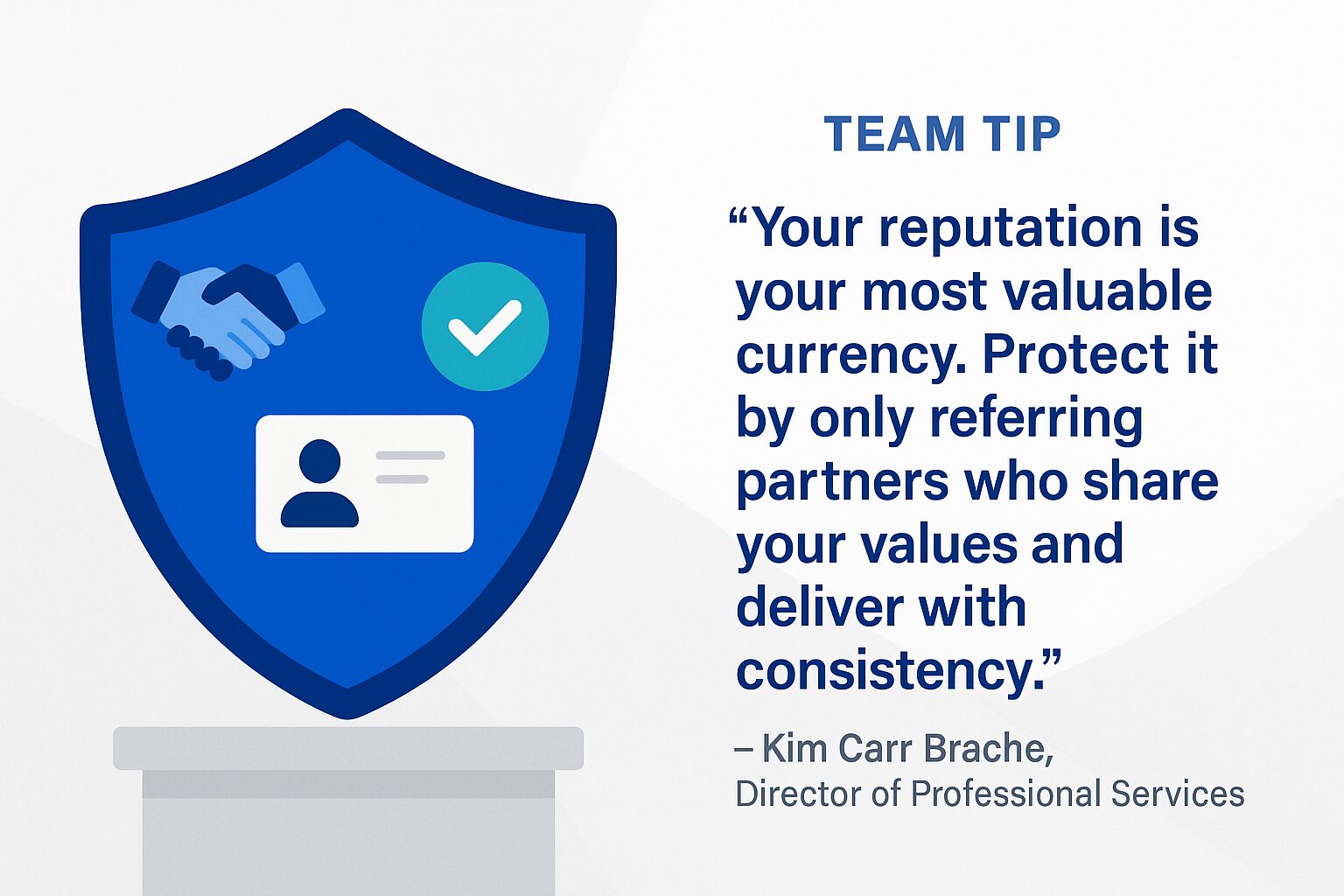
A referral puts your reputation at risk because you are vouching for someone else’s work with your own credibility. When you recommend a partner to a client, you transfer some of the trust you have earned to a third party you do not control. If that partner delivers, your judgment looks sharp. If they miss, the client remembers who made the introduction.
That risk is the flip side of how valuable referrals are. According to Nielsen’s Trust in Advertising study (2021), 88% of people trust recommendations from those they know more than any other channel. A referral carries that much weight precisely because your name is attached to it, which is also why a bad one stings. The good news: you can protect your credibility and still create real value for clients by approaching referrals with structure instead of instinct.
What is a referral partner?
A referral partner is a business or individual you trust enough to recommend to your own clients, knowing their performance will reflect on you. Unlike a casual vendor you use once, a referral partner effectively joins your extended team in the client’s eyes. That is why the bar is higher: you are lending them your reputation, so their values, reliability, and results have to hold up under your name.
How do you choose the right referral partner?
Choose a referral partner the way you would choose a member of your own team, because to the client that is effectively what they become. Before you send anyone a warm introduction, weigh three things: shared values, a proven track record, and reliable communication. A partner who clears all three reinforces your credibility. A partner who is strong on skill but shaky on reliability is where the risk hides.
Use this quick screen before you make any introduction:
| What to check | Green light to refer | Hold off and reconsider |
|---|---|---|
| Shared values | They protect quality and the client experience under pressure. | They cut corners or go quiet when a deadline gets tight. |
| Track record | They can point to real results and references in this kind of work. | The portfolio is vague, dated, or outside the client’s need. |
| Communication | They respond promptly and explain things in plain language. | Replies are slow, jargon-heavy, or hard to pin down. |
| Reliability | They do what they say, on the timeline they committed to. | Commitments slip and follow-through depends on chasing. |
A partner who lines up with your reputation strengthens it. If the warning signs are already showing, it is worth understanding why some partnerships fail and how to avoid the pitfalls before you put your name on the introduction.
When should you refer a client to a partner instead of handling it yourself?
Refer a client to a partner when the work sits outside your core expertise, when your capacity is genuinely full, or when a specialist will get the client a materially better outcome than you can. Handle it yourself when the request is squarely in your lane and you have the bandwidth to deliver well. The test is simple: pick whichever path best serves the client’s result, not whichever protects your revenue in the short term. Recommending the right partner at the right moment builds more long-term trust than stretching to cover work you are not the best fit for.
How do you set expectations before an introduction?
Set expectations on both sides before the introduction so no one is guessing about scope or fit. The client should know exactly why you are recommending this partner and what to expect, and the partner should understand how much your reputation rides on the client’s experience. A short call or a written note before the handoff prevents most of the awkwardness that surfaces later.
How to Refer a Web Partner Without Risking Your Reputation digs into the practical side of this.
Cover these points before you connect the two parties:
- Explain to your client why this partner is the right fit for their specific need.
- Outline the type of work, results, and timeline they can reasonably expect.
- Tell the partner plainly that client experience is what your reputation depends on.
Transparency protects everyone involved and sets a professional tone from the first email. The strongest partners take it further and simplify complex client needs into a clear plan, instead of handing the client more to manage.
How do you stay involved after the handoff?
Stay involved after the handoff because your role does not end at the introduction. The trust you transferred is still yours to protect, so a light touch of follow-up signals that you care about the outcome, not just the connection. You do not need to manage the engagement, only to confirm it is working and step in if it is not.
Protect your reputation after the introduction by:
- Following up with the client to confirm the referral is delivering as expected.
- Checking in with the partner to see whether they need more context to succeed.
- Offering support if challenges arise, even when you are not directly responsible.
Ongoing involvement turns a one-time favor into evidence that you stand behind your recommendations.
Why should you track referrals as a system?
Track referrals as a system because what gets measured is what you can improve and defend. A simple log turns scattered introductions into a feedback loop that shows which partners earn your endorsement and which quietly put it at risk. Over time, that record lets you refer with confidence instead of from memory.
Capture three things for every referral you make:
- Who you referred, to which client, and why they were the right fit.
- Status updates on the introduction as it progresses.
- The outcome, so you can confirm whether the partnership added value.
That discipline scales. In our work with JazzHR, a recruiting software company, we turned a 250+ partner network that had been buried on a single web page into a structured partner marketplace, and the organized system generated 250+ new partner requests and 30+ qualified opportunities. The lesson translates directly to your own referrals: when partner relationships are tracked and visible instead of ad hoc, the good ones compound. Reviewing this data makes the pattern obvious: you keep referring the partners who strengthen your reputation and stop sending business to the ones who do not. That same discipline, applied to your own digital presence, is the kind of strategic support that keeps your brand credible enough for others to recommend in return. If you build referral relationships with other firms, structured agency partnership support can give those introductions a dependable home.
Frequently asked questions
Should I make a referral if I am not completely sure about the partner?
No. If you are not confident in a partner’s values, track record, and reliability, hold the introduction until you are. A referral attaches your credibility to their work, so uncertainty is a reason to wait. It is better to offer no referral than to make one you may regret in front of a client.
How do you politely decline making a referral?
Decline by being warm but honest: say the request is outside your network or that you cannot personally vouch for the right fit yet, and offer another form of help instead. A short, respectful “I don’t have someone I’d confidently recommend for that” protects both the client and your reputation. People trust a selective referrer far more than one who introduces anyone.
How involved should I stay after making a referral?
Stay involved enough to confirm the engagement is working without managing it for the partner. A brief check-in with the client and the partner is usually plenty. The goal is to catch a problem early and show you stand behind the recommendation, not to insert yourself into work you handed off.
What is the biggest mistake people make with referrals?
The biggest mistake is treating referrals as casual favors instead of reputation decisions. Skipping the vetting, setting no expectations, and never following up is how a well-meant introduction damages trust. Structure, not enthusiasm, is what makes a referral reflect well on you over the long run.
How does my own website affect the referrals I receive?
A credible, reliable website makes you easier to recommend, because partners and clients are extending their trust to whatever your brand looks like online. A site that loads fast, communicates clearly, and works for everyone signals that you take quality seriously, which encourages the reciprocal referrals that grow a partnership network.
How 3 Media Web can help
Referrals flow more freely when your own digital presence is credible, reliable, and easy to vouch for. That foundation makes it simpler for partners to recommend you and for clients to see you as a leader, and it reflects our Human and AI approach, where judgment guides the strategy and technology supports the execution. We help organizations strengthen that foundation through strategic support and our wider digital experience services, including:
- Professional web design and development that showcases your authority.
- Reliable website support that keeps your brand reputation strong.
- Strategic SEO and lead generation that increase visibility and trust.
- Conversion rate optimization so referred visitors turn into measurable results.
- Accessibility best practices that demonstrate inclusivity and professionalism.
With the right systems in place, your digital presence reinforces the credibility you extend with every referral. Reach out to our team to talk through how a stronger website can support the partnerships you are building.
This topic and more are covered in our complete guide to agency partnerships.