Last updated: July 6, 2026
TL;DR:
- Treat referrals as a structured revenue channel with owners, targets, and reporting, not as luck that arrives when it arrives.
- Strong partnerships start with a clear value exchange: partners refer more when they know exactly what they gain.
- A simple, transparent process and consistent communication keep referrals flowing and build partner trust.
- Recognition fuels loyalty, and measuring referral revenue like any growth channel turns goodwill into repeatable profit.
Why Does Referral Revenue Feel So Unpredictable?
Referral revenue feels unpredictable because most companies leave it to chance instead of running it as a managed channel. Deals trickle in at random, partners forget to follow up, and warm introductions slip through the cracks, so leadership can never forecast what referrals will contribute next quarter. The fix is to treat referrals the way you treat paid or organic search: a defined program with an owner, a process, and measurable goals.
Partner Referral Growth: How to Turn One Referral Into Ten digs into the practical side of this.
That investment is worth making because referrals convert on trust that advertising cannot buy. According to a global Nielsen study (2012), 92% of consumers said they trust recommendations from people they know more than any other form of marketing. When a respected partner makes the introduction, the prospect arrives already believing you can deliver, which shortens sales cycles and lifts close rates. A referral revenue playbook captures that trust and makes it repeatable.
What Is Referral Revenue?
Referral revenue is income generated from new customers who were introduced by an existing partner, client, or advocate rather than acquired through paid or outbound channels. In a B2B context it usually flows through a partner program with a defined value exchange, a submission process, and revenue attribution. Because it starts with a trusted recommendation, it typically converts faster and at lower cost than cold-sourced pipeline.
Ad Hoc Referrals vs. a Structured Referral Program
The difference between hoping for referrals and building a referral program is the difference between an occasional favor and a forecastable revenue line. The comparison below shows how the same five levers behave when referrals are left to chance versus managed deliberately.
| Attribute | Ad Hoc Referrals | Structured Referral Program |
|---|---|---|
| Value exchange | Unspoken; partners are unsure what they get | Defined incentives and reciprocal benefits, agreed up front |
| Process | Ad hoc emails, no clear path to submit a lead | Dedicated form or landing page plus ready-to-send templates |
| Communication | Silence after the hand-off; partners left guessing | Every lead confirmed and progress shared to close the loop |
| Recognition | Inconsistent or forgotten thank-yous | Public credit, rewards, and personal notes tied to wins |
| Measurement | No KPIs; revenue impact is invisible | Referred leads, closed deals, and attributed revenue tracked quarterly |
Step 1: Clarify the Value Exchange
Partners refer more when they know exactly what they gain, so define the value exchange before you ask for a single introduction. Strong partnerships are built on reciprocity, and the clearer the benefit, the more consistent the referrals. Spell out what partners receive:
- Revenue-sharing or commission structures
- Reciprocal introductions into your own network
- Access to co-marketing campaigns, insights, or events
- Stronger client relationships through value-added introductions
When both sides see tangible benefit, referrals shift from occasional favors to consistent business drivers. Trust is the foundation underneath that exchange; our guide on building trust in partnerships covers how to earn the credibility that makes partners want to refer in the first place.
Step 2: Create a Simple Referral Process
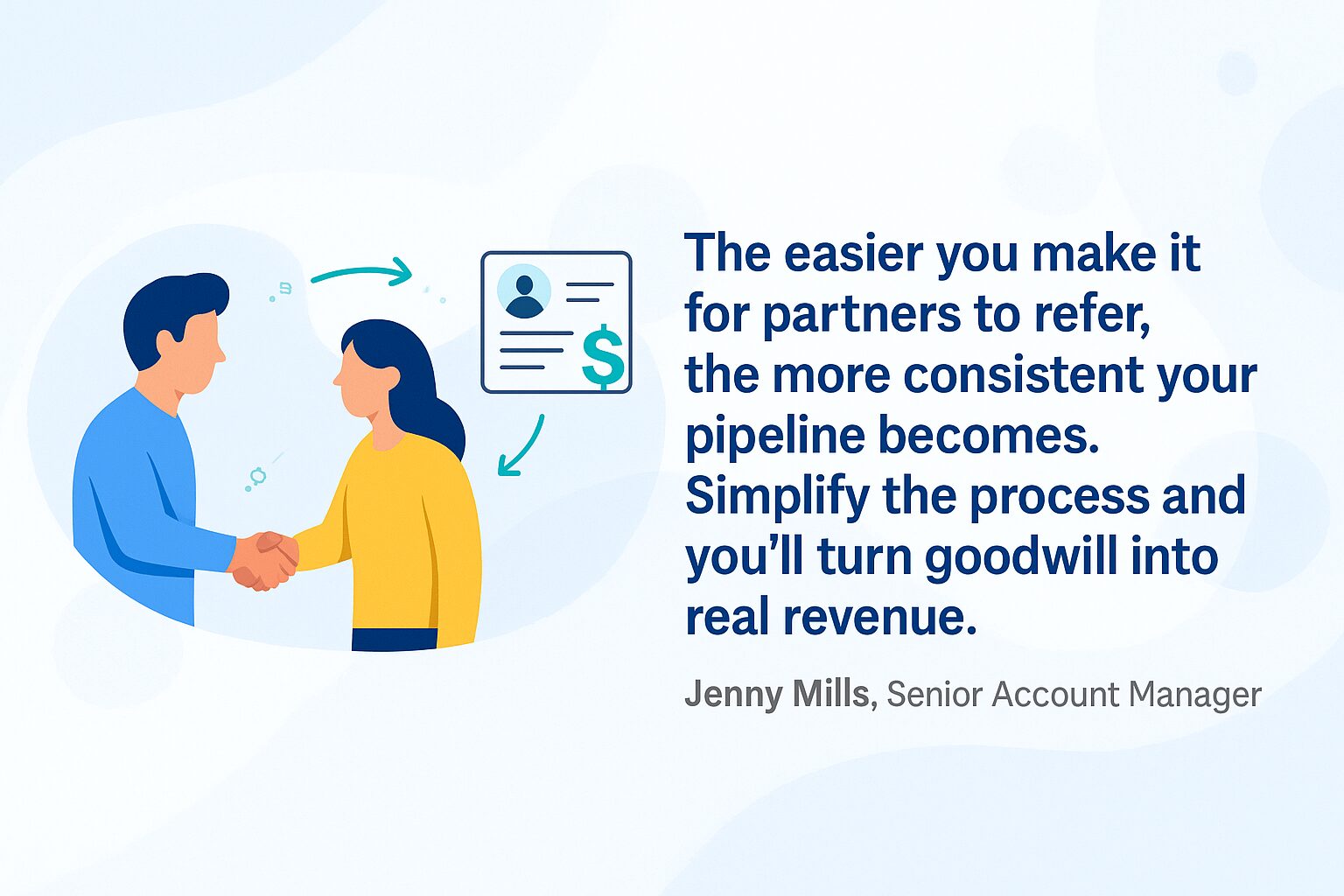
The easier you make an introduction, the more often it happens, so remove every point of friction from your referral process. A streamlined path also signals that you respect your partner’s time. Give partners the tools to act in minutes:
- Provide a dedicated referral landing page or submission form
- Offer templated email copy that partners can copy, paste, and send
- Track every referral in a shared system or CRM so partners can follow progress
When the interaction is well designed, that showcase becomes a lead engine in its own right. In our work with recruiting-software company JazzHR, we built a dedicated partner marketplace microsite that gave a 250-plus partner network an interactive home instead of a single buried page; after launch it generated 250-plus new partner requests and 30-plus qualified opportunities. A frictionless process is also a conversion problem: the same conversion rate optimization discipline that turns website visitors into leads should govern how a referred prospect moves from introduction to booked call.
Step 3: Keep Partners in the Loop
Nothing kills a referral program faster than silence, so treat communication as a core part of the process rather than an afterthought. Partners who never hear what happened to their introduction stop making them. Keep partners engaged by:
- Confirming every lead the moment it is received
- Sharing timely updates without oversharing sensitive client details
- Closing the loop when a deal is won and naming the outcome
Consistent communication builds the confidence that their effort is making an impact, and that confidence is what sustains referrals over years rather than weeks.
Step 4: Recognize and Reward Contributions
Recognition fuels loyalty even more than incentives, so make appreciation visible and consistent. Financial rewards matter, but partners remember how it felt to be valued. Combine tangible and personal recognition:
- Public acknowledgment in newsletters, LinkedIn posts, or at industry events
- Exclusive content, strategy sessions, or partner-only gatherings
- Personalized thank-you notes tied to specific wins
A simple thank-you, delivered consistently, goes further than most organizations realize. The strongest referral engines are relationships that compound; our take on building referral relationships that last explains how to keep that goodwill growing year over year.
Step 5: Measure Referral Revenue Like a Growth Channel
Measure referral revenue with the same rigor you apply to paid or organic search, because what you do not track, you cannot grow. A referral channel without KPIs is invisible to leadership and impossible to optimize. Run it on data:
- Track KPIs: referred leads, deals closed, and revenue attributed to partners
- Review performance quarterly with your key partners
- Optimize incentives, messaging, and process based on what the numbers show
When you track and improve a referral program like any other channel, goodwill becomes sustainable, forecastable revenue growth.
When Should You Formalize a Referral Program?
Formalize a referral program once introductions are already happening but you cannot predict or measure them. If partners send occasional leads, no one owns the follow-up, and revenue never appears in a report, you have outgrown ad hoc referrals. The trigger is not a headcount or revenue milestone; it is the moment inconsistency starts costing you forecastable pipeline. Assign an owner, document the value exchange, and start tracking before you scale outreach.
How 3 Media Web Can Help
A referral program only performs when the digital experience behind it earns trust and converts the traffic it attracts. Partners introduce prospects to your website first, so that experience has to reinforce credibility and move referred leads toward a decision. Our strategic support team helps the technology behind your referral channel pull its weight:
- A credible, conversion-ready website through professional web design and development that makes partners proud to refer you
- Reliable website hosting, maintenance, and support so your referral program never stalls on a technical hiccup
- Smart SEO strategy and lead generation that capture and nurture the traffic referred prospects bring
- Conversion rate optimization that moves referrals efficiently from introduction to closed deal
If your growth depends on channel or agency relationships, the same discipline applies to how you support those partners; our agency partnership support shows how we help partners deliver for their own clients. With the right systems in place, your referral channel becomes more than a source of goodwill. It becomes a measurable driver of revenue. Explore the full digital experience approach to see how strategy, build, and support work together to grow your pipeline.
This post is part of our Agency Partnership Playbook — the complete guide to referrals, vetting, and long-term partnership value.