Last updated: July 6, 2026
- Most referral damage comes from six avoidable mistakes: treating a referral as a transaction, going silent after the handoff, overpromising, ignoring fit, failing to recognize the partner, and having no documented process.
- A referral is a trust handoff, not a lead: a partner is lending you their credibility when they make the introduction.
- The stakes are high because recommendations are the most trusted form of marketing there is: 88% of people trust recommendations from people they know more than any other channel.
- The fix for every mistake is the same discipline: prompt follow-through, transparent communication, honest scoping, and visible appreciation.
- Consistency and integrity are what turn a one-time referral into a partner who keeps sending their best clients.
What referral mistakes cost agencies the most credibility?
The referral mistakes that cost agencies the most credibility are treating a referral as a transaction, going silent after the handoff, overpromising to impress, ignoring whether the work is a fit, failing to recognize the partner who made the introduction, and running referrals with no documented process. Each one quietly tells your partner their trust was misplaced. The good news is that every one is preventable with the same handful of habits: respond fast, communicate openly, scope honestly, and close the loop.
For many agencies, referrals are the backbone of growth. You build strong relationships, do great work, and your partners reward you with introductions to their best clients. But a single misstep, such as slow follow-up, unclear communication, or a lack of transparency, can make even a loyal partner think twice before sending the next lead.
The stakes are higher than one lost opportunity. A referral hands you the most trusted form of marketing there is. In its 2021 Trust in Advertising study, Nielsen (2021) found that 88% of global respondents trust recommendations from people they know more than any other channel. When a partner refers you, they spend that hard-earned trust on your behalf. Mishandle the introduction and you do not just lose a deal, you spend down their credibility and your own. The sections below break down each mistake and the fix, the same way a strong trust-first approach turns partnerships into repeat referral wins.
What is a referral trust handoff?
A referral trust handoff is the moment a partner lends you their own credibility by recommending you to a client who already trusts them. You are not receiving a cold lead; you are being handed borrowed reputation. That framing changes how you respond: every reply, timeline, and update either repays that trust or spends it down. Treat the handoff as borrowed credibility and the right behaviors follow naturally.
The six referral mistakes at a glance
Every common referral mistake sends a specific signal to the partner who vouched for you, and every one has a concrete fix. Use the table below as a fast diagnostic: find the behavior, see what it tells your partner, and apply the correction. The detailed sections follow.
| Mistake | What it signals to your partner | The fix |
|---|---|---|
| Treating referrals as transactions | You value the lead, not the relationship behind it. | Thank the partner, reference them with the lead, and report back. |
| No communication after the handoff | Their reputation is in the dark and possibly at risk. | Send short status updates and share the outcome, win or lose. |
| Overpromising to impress | You will overcommit and then underdeliver on their client. | Set clear expectations on scope, timeline, and capacity up front. |
| Ignoring fit | You will take any work, even work you cannot do well. | Decline gracefully and recommend a better-suited vendor. |
| Not recognizing the partner | Their introduction went unnoticed and unappreciated. | Acknowledge them sincerely and share the results they helped create. |
| No formalized process | Referring you is unpredictable and easy to drop. | Document how referrals are submitted, tracked, and closed. |
Mistake #1: Treating referrals as transactions
Treating a referral as a transaction is the fastest way to undermine the trust that produced it. When a partner makes an introduction, they put their reputation on the line. Handle that lead like a cold inquiry rather than a trusted handoff and you weaken both your credibility and your partner’s confidence in you.
We collected everything we know about partnerships in one place: the Agency Partnership Playbook.
A referral is a relationship handoff, not a transaction. It deserves care, attentiveness, and respect for everyone involved. To get it right:
- Thank the partner immediately and confirm you received the referral.
- Reach out to the lead promptly, referencing the partner’s name to establish the connection.
- Follow up with your partner to share how the conversation went.
Small gestures like these show that you value the relationship, not just the lead.
Our post The Anatomy of a Profitable Referral Relationship explores this in more detail.
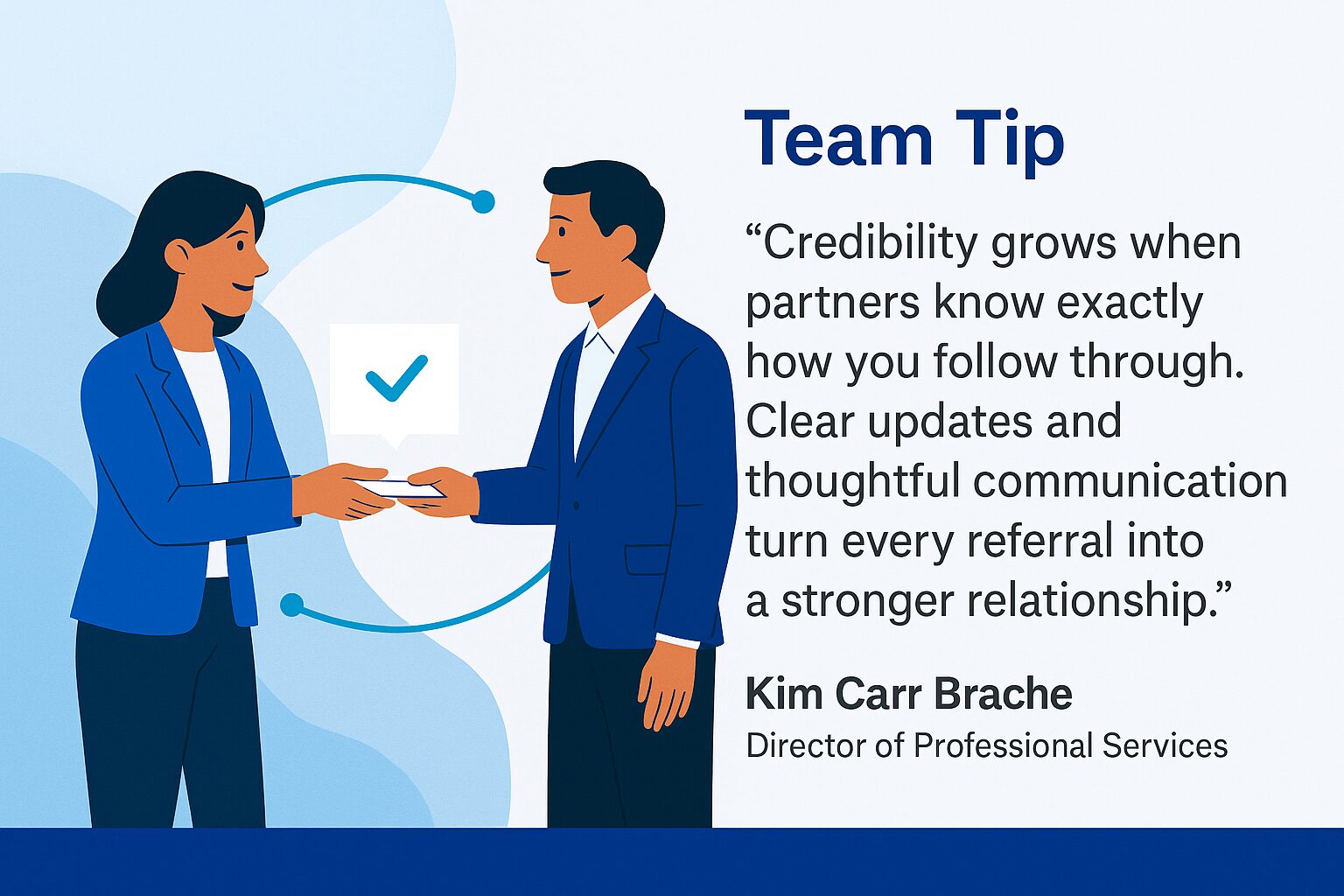
Mistake #2: Going silent after the handoff
Silence after the handoff is one of the biggest frustrations a referral partner can experience. They introduce you, and then nothing follows: no update, no context, no idea whether the lead ever converted. That absence of visibility leaves the partner guessing about the quality of the interaction and whether their reputation took a hit.
Build transparency into your process so the partner is never in the dark:
- Send periodic updates, even short ones, about the lead’s status.
- Let your partner know if the opportunity is not a fit, and why.
- Share the outcome when a referral turns into a win.
Consistent communication keeps everyone aligned and reinforces your professionalism.
In our own work, proactive communication is what turns a single introduction into a lasting partnership. When JazzHR, a recruiting software company, first brought us in to build their partner marketplace, we treated reporting as a default rather than an afterthought. As their Senior Marketing Manager, Samantha Spano, put it, “They’re really good about letting us know what’s going on, and they make sure that they send us reporting and any updates about the site, even when we’re not asking.” That habit of closing the loop is why JazzHR moved us from a one-off project to ongoing support, and why the marketplace we launched went on to generate more than 250 new partner requests and 30-plus qualified opportunities. The lesson for referrals is the same: visibility is what protects the reputation on the line.
Mistake #3: Overpromising to impress
Overpromising to impress a partner is one of the fastest ways to lose credibility once delivery falls short. It is tempting to oversell your capabilities when you are eager to win a new client, but optimism you cannot back up always costs more than honesty. Whether the subject is timelines, pricing, or scope, the truth serves you better than a promise you will miss.
To protect your integrity:
- Set clear expectations about what you can and cannot do.
- Be transparent about timelines, capacity, and process.
- Raise issues early, before they grow into bigger problems.
Partners remember when you tell the truth, even when it is not the easiest answer.
Mistake #4: Ignoring whether the work is a fit
Accepting a referral that does not fit your strengths damages credibility for both you and your partner. Not every referral is the right one. Some agencies take leads that do not align with their services, team capacity, or expertise, hoping they can make it work, and a disappointed client is the result. It is better to decline politely than to deliver a subpar experience.
Before you accept, ask:
- Does this project align with our core strengths, such as web design and development, ongoing website support, or digital strategy?
- Can we deliver results that reflect well on both agencies?
- Would this lead genuinely benefit from our approach?
If the answer is no, make a thoughtful recommendation to another trusted vendor. That honesty builds long-term respect and keeps the partner comfortable referring again.
When should you decline a referral?
Decline a referral when the work falls outside your core strengths, when your team lacks the capacity to deliver on time, or when the client’s goals do not match what you do best. Saying no early, and pointing the partner toward a better-suited vendor, protects everyone’s reputation. A graceful decline signals that you value the client’s outcome over a quick win, which makes partners more comfortable referring again.
Mistake #5: Failing to recognize the partner’s role
Failing to acknowledge the partner who made the introduction is a missed chance to strengthen the relationship. Every successful referral is a shared success. Recognition does not need to be elaborate, only consistent and sincere.
Ways to show appreciation:
- Send a personal thank-you message or a small gesture of gratitude.
- Acknowledge your partner publicly, with permission, when a project launches.
- Share performance metrics or results to show how their referral turned into success.
When partners feel appreciated, they are far more motivated to refer again.
Mistake #6: Running referrals with no formalized process
Without a documented process, even well-intentioned referrals become disorganized or forgotten. A simple, written process ensures consistency and professionalism every time, and it makes referring you easy. Your referral process should spell out:
- How referrals are submitted.
- How updates are communicated.
- What incentives or commissions are offered, if any.
- How outcomes are tracked and celebrated.
Structure builds trust by eliminating guesswork. A predictable process is also what sustains a partnership between handoffs, which is the heart of building referral relationships that last rather than fading after a single introduction. If you formalize referrals with another firm, dedicated agency partnership support can give both teams a shared process for handoffs, updates, and reporting.
Frequently asked questions
Why is mishandling a referral so damaging to an agency’s credibility?
Mishandling a referral is damaging because a referral is a trust handoff, not just a lead. The partner spends their own credibility to recommend you, and recommendations are the most trusted form of marketing, with 88% of people trusting them over any other channel. A poor experience reflects on both your reputation and theirs.
What is the most common referral mistake agencies make?
The most common mistake is going silent after the handoff. The partner makes the introduction and then hears nothing about whether the lead converted or how it went. That lack of visibility erodes trust quickly. Short, periodic status updates and a clear final outcome, win or lose, prevent it entirely.
How should you handle a referral that is not a good fit?
Decline it gracefully and recommend a better-suited vendor. Taking work outside your core strengths risks a disappointed client and damages both your credibility and your partner’s. A thoughtful, honest redirection protects everyone’s reputation and signals to the partner that you prioritize their client’s outcome over a quick win.
How do you thank a partner for a referral the right way?
Recognition should be sincere and consistent, not elaborate. Send a personal thank-you, acknowledge the partner publicly when appropriate and with permission, and share the results their referral produced. Reporting outcomes back closes the loop and shows the introduction mattered, which makes the partner far more likely to refer again.
Do you need a formal referral process for a small agency?
Yes. Even a one-page process helps. Document how referrals are submitted, how updates are shared, any reciprocity or commission, and how outcomes are tracked. Structure removes guesswork, keeps both teams looking professional to the client in the middle, and makes referring you predictable enough that partners do it again.
How do you build a referral process that protects credibility?
Start with four steps: acknowledge every referral the day it arrives, agree on how often you will update the partner, scope the work honestly before you commit, and report the outcome back whether you win or lose. Document those steps in one page so they happen every time. A repeatable loop of acknowledge, update, scope, and report is what keeps a partner’s reputation safe and earns the next introduction.
How 3 Media Web Can Help
The strongest referral partnerships are built on clarity, consistency, and follow-through, not one-off favors. At 3 Media Web, we have built long-term partnerships with agencies who trust us to care for their clients like our own, guided by a Human and AI approach so judgment leads and automation supports. For partners, that includes custom web design and development, ongoing website support, and results-driven growth work delivered as a dependable strategic support partner across the full digital experience. We believe transparency and follow-through are what turn referrals into reliable revenue streams for everyone involved. Reach out to our team to talk through a referral partnership built to protect your reputation and grow with you.