Last updated: July 14, 2026
- Run two tracks at once. Keep optimizing your live site while the new one is built, so visibility and lead flow never pause.
- Anchor the launch to a business milestone (a funding round, data readout, or product announcement) so the redesign amplifies momentum instead of competing with it.
- Protect SEO with a redirect plan. Mapped 301 redirects move your ranking signals to the new URLs, so legacy traffic and authority carry over.
- Decide what cannot be interrupted first: investor communications, active campaigns, and reputation-critical scientific content.
- A web strategy partner and ongoing website support keep the project moving without stalling your other priorities.
Few roles are as complex as marketing leadership in biotech. You are managing rapid scientific innovation, investor relations, regulatory reviews, and partnerships, all while making sure your digital presence reflects the company’s credibility and growth.
When the website starts lagging behind your story, a full overhaul can feel unavoidable. The challenge is that a redesign can quietly pull focus, drain internal bandwidth, and disrupt live marketing campaigns if it is not managed with a plan.
How do you overhaul a biotech website without losing momentum?
You keep the current site working for you while the new one is built. Instead of freezing all updates until launch day, you run a dual-track plan: short-term optimization on the live site (SEO, messaging, compliance) alongside the long-term rebuild. You anchor the go-live to a business milestone, keep cross-functional teams in sync with short check-ins, and protect search rankings with a mapped redirect strategy. Done this way, a website overhaul becomes a planned growth event rather than a months-long blackout. The six steps below break down exactly how to do it, and a clear web strategy is what ties them together.
Step 1: Define What “Momentum” Means for Your Organization
Every biotech company moves fast, but not in the same way. For some, momentum means a steady flow of qualified investor meetings. For others, it is nurturing research partnerships or launching educational campaigns ahead of upcoming clinical phases.
Why Biotech CMOs Need a Website Partner Who Can Keep Up offers a hands-on take on this.
Before you kick off a website overhaul, get specific about what must not be interrupted. Common examples include:
- Investor communications or funding announcements
- Live campaign performance or lead pipelines
- Ongoing partnerships or clinical trial updates
- Reputation-critical assets like scientific resources or press coverage
These priorities shape your rollout strategy and identify what needs to stay live and untouched during development. Write them down and share them with everyone involved, because the fastest way to derail momentum is for one team to break something another team depends on.
Step 2: Create a Parallel Path for Progress
One of the biggest mistakes biotech marketers make is halting every website update until the new site launches. That freeze can stall visibility and engagement for months, right when you need them most.
Instead, use a dual-track approach so quick wins and the long-term rebuild move at the same time. One track keeps your current site earning while the other builds its replacement.
| Approach | Track 1: Short-Term Optimization (Live Site) | Track 2: Long-Term Overhaul (New Site) |
|---|---|---|
| Goal | Protect current traffic, rankings, and leads | Build a growth-ready platform for the next phase |
| Typical work | Optimize high-traffic pages for SEO, refresh outdated messaging, fix accessibility and compliance gaps | New site structure, visual design, templates, and functionality |
| Timeline | Continuous, week to week | Runs in parallel through the full build |
| Owner | Marketing plus support partner | Design and development team |
| Momentum impact | Keeps campaigns and search visibility alive | Prevents a disruptive “big bang” relaunch |
This is also where teams with limited bandwidth feel the squeeze. If you are deciding what to fix now versus later, our guide on how to prioritize website tasks when you are a team of one or two offers a simple framework for triaging the short-term track.
What is a dual-track website redesign?
A dual-track website redesign runs two workstreams in parallel: one team keeps optimizing and updating your live site (SEO, messaging, compliance, campaign pages) while a second team builds the replacement site behind the scenes. Nothing goes dark. Instead of a months-long content freeze that stalls rankings and leads, your current site keeps earning right up to launch day, then hands its authority to the new one.
When should you optimize your current site versus rebuild it?
Optimize when the problem is content, messaging, or specific pages and the underlying platform is sound. Rebuild when the structure itself is holding you back, for example a rigid CMS, fragmented microsites, accumulated plugin bloat, or a template your marketing team cannot edit without a developer. In practice most biotech teams do both at once: quick wins on the live site now, a full rebuild in parallel, so momentum never pauses while the bigger fix ships.
Step 3: Anchor the Redesign to Business Milestones
In biotech, timing is everything. Align your website overhaul with existing business events so the launch works with your calendar instead of against it.
23 Best Biotech Website Designs for 2026 (With Examples) digs into the practical side of this.
For example:
- Launch the redesign just before a major product or trial announcement.
- Refresh your investor relations section ahead of quarterly updates.
- Revise scientific content alongside new data releases.
This turns your redesign into a strategic milestone, one that amplifies visibility instead of competing with other initiatives. A documented web strategy makes these dependencies visible early, so design, content, and development all aim at the same launch window.
Step 4: Keep Teams in Sync
A website overhaul pulls in input from across the organization: marketing, compliance, IT, design, and leadership. The more departments involved, the greater the potential for bottlenecks.
To stay aligned:
- Hold short, consistent check-ins instead of infrequent marathon reviews.
- Use shared documentation and project tools so everyone sees the same status.
- Define clear decision-makers for each phase (content, design, approval).
- Keep internal messaging clear: the goal is momentum, not perfection.
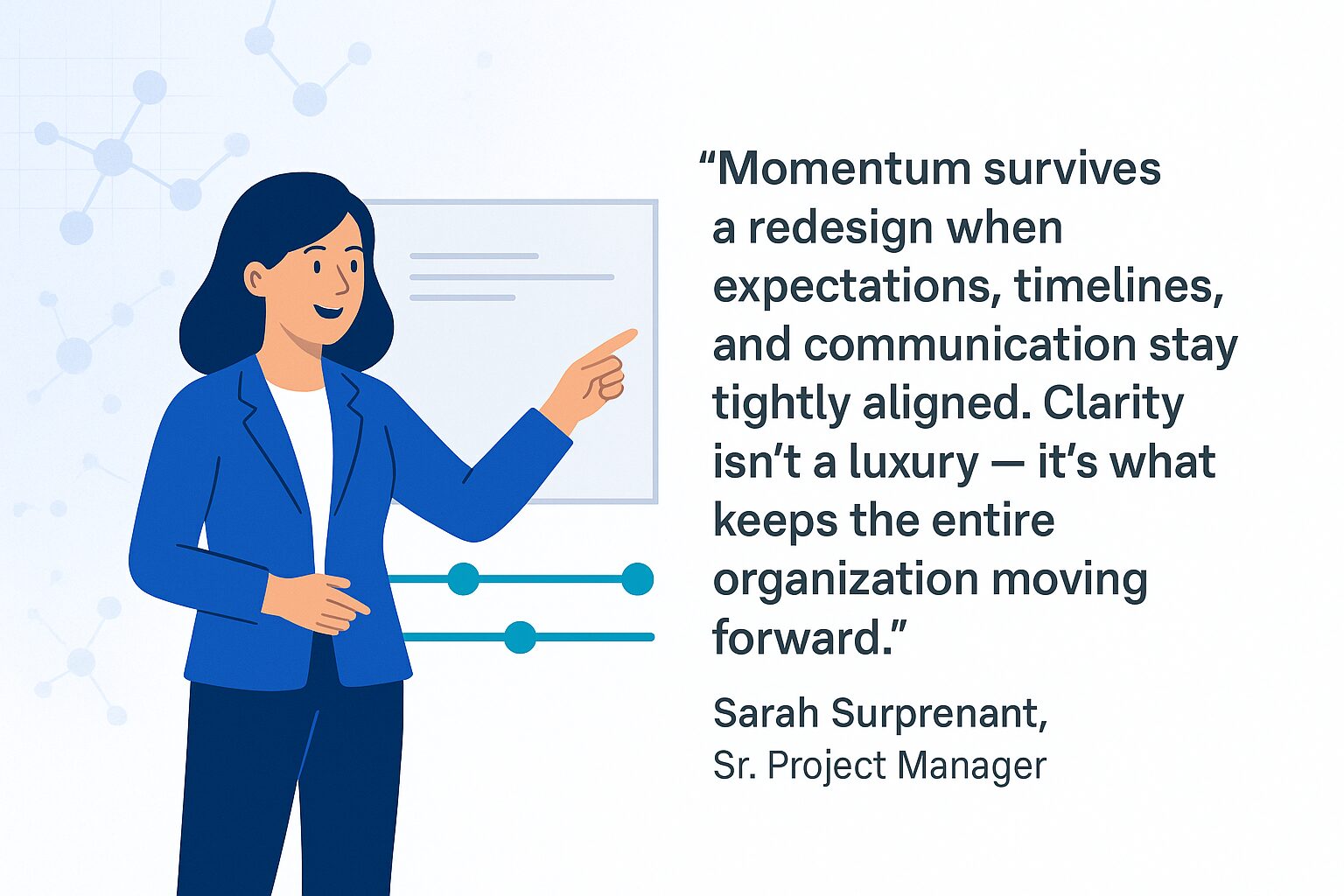
Regular communication ensures that no one feels sidelined and that small roadblocks do not stall progress. Strong project management is often what separates a smooth overhaul from a stalled one, and it is a common breaking point. If you have lived through a rocky vendor experience, why some partnerships fail covers the warning signs worth watching for before they cost you a launch.
Step 5: Protect Performance During Transition
As you move from your old site to your new one, protecting visibility and performance is critical. Make sure your partner team prioritizes:
- Mapped redirects for legacy pages to preserve SEO value
- A content freeze plan that keeps information accurate during migration
- Active uptime monitoring and website support after launch
- Analytics tracking continuity so you can measure success from day one
The redirect step matters more than most teams expect. According to Google Search Central, in its site-move documentation, permanent 301 redirects do not cause a loss in PageRank, so a complete old-to-new URL map is what carries your hard-won rankings across the move. Google also notes that some ranking fluctuation and a temporary traffic shift are normal during a migration, which is exactly why ongoing website support and monitoring belong in the plan from day one. That combination prevents the traffic drops, missed leads, and data gaps that can quietly derail your reporting.
You can explore this further in Website Traffic Declining? How to Diagnose and Fix It.
This is where redirect mapping earns its keep. In our work with Anika Therapeutics, a publicly traded regenerative medicine company (NASDAQ: ANIK), we consolidated four fragmented websites into a single platform and rationalized more than 350 pages down to roughly 75 essentials. Strategic redirect mapping was what let us collapse that sprawl while consolidating domain authority instead of scattering it, and a new custom block library cut the marketing team’s content-update turnaround from weeks to minutes, so they kept moving through the transition rather than waiting on it.
Step 6: Plan for Ongoing Optimization
A website overhaul is never truly “done.” For biotech marketers, your site should evolve as fast as your science. Once it is live, prioritize continuous improvement through:
- Ongoing conversion rate optimization
- Quarterly content refreshes for thought leadership and news
- Regular performance and accessibility audits
- Testing new campaign landing pages to support lead generation
This approach keeps your site agile, compliant, and aligned with your next growth phase, so the work you invested in the overhaul keeps compounding instead of aging out.
How 3 Media Web Can Help
At 3 Media Web, we partner with biotech and health organizations to deliver web design and development that aligns with business-critical milestones. Our Human + AI approach pairs strategic planning with responsive execution, so your digital presence evolves without interrupting your existing marketing or investor momentum.
Through proactive website support, performance tracking, and a clear web strategy, we help biotech leaders stay focused on innovation while their website keeps driving measurable results. If a redesign is on your roadmap, let’s map a plan that protects your momentum from day one.
See how this fits the bigger picture in our biotech web design overview — how we design, build, and support sites for life-science marketing teams.