Last updated: July 7, 2026
- A referral engine is a documented, repeatable system that turns occasional introductions into a predictable lead channel, not a series of one-off favors.
- Build it in five moves: define your ideal client, add structure and partner tiers, power it with tech, stay top of mind, and turn wins into growth loops.
- The payoff is measurable. According to Harvard Business Review (2011), a structured customer referral program is “strikingly profitable,” and Harvard Business Review (2024) found referred customers refer 30-57% more new customers than non-referred ones.
- Treat referrals like any growth channel: track source, pipeline stage, deal value, and payout so you can prove ROI to leadership.
- Agencies that invest in a referral system gain long-term revenue stability and deeper partner trust.
What is a referral engine, and how do you build one that scales?
A referral engine is a documented, repeatable system that consistently rewards partners, attracts aligned agencies, and keeps everyone engaged long after the first deal closes. You build one that scales by defining who your best-fit clients are, adding structure and incentives, powering the process with technology, staying top of mind with partners, and turning every win into the next introduction. Agencies that run referrals this way build a pipeline they can forecast. Agencies that rely on the occasional favor cannot.
Most agency leaders know the joy of a good referral: a trusted partner brings in a dream-fit client, and everyone wins. The problem is not that referrals fail. The problem is that they are rarely structured to scale. As your agency grows, casual goodwill stops being enough, and a referral engine built on intention takes its place.
The business case is strong. For leaders wondering whether a referral program does anything beyond handing established partners some extra cash, Harvard Business Review offers reassurance. According to Harvard Business Review (2011), after studying 10,000 accounts at a large bank over three years, researchers concluded a customer referral program can be strikingly profitable. A systematic engine compounds; a string of one-off favors resets every quarter.
Step 1: Define what a “good” referral looks like
The first rule of scalable referrals is clarity: every partner in your network should be able to describe exactly who your ideal clients are, what problems you solve, and how you create value. When a partner can explain your value better than you can, you have hit the clarity mark, and the wrong-fit introductions that waste everyone’s time disappear.
Create a simple one-page reference document that spells out:
- The client types you serve best (industry, size, and core needs).
- Your core services, such as web design and development, digital marketing, or strategic website support.
- The differentiators that make you a reliable partner, such as responsiveness, transparency, and a strategy-first approach.
- A clear description of what a successful, qualified referral actually looks like.
This clarity is the same groundwork that builds confidence between partners. For the relationship side of that equation, see building trust in partnerships.
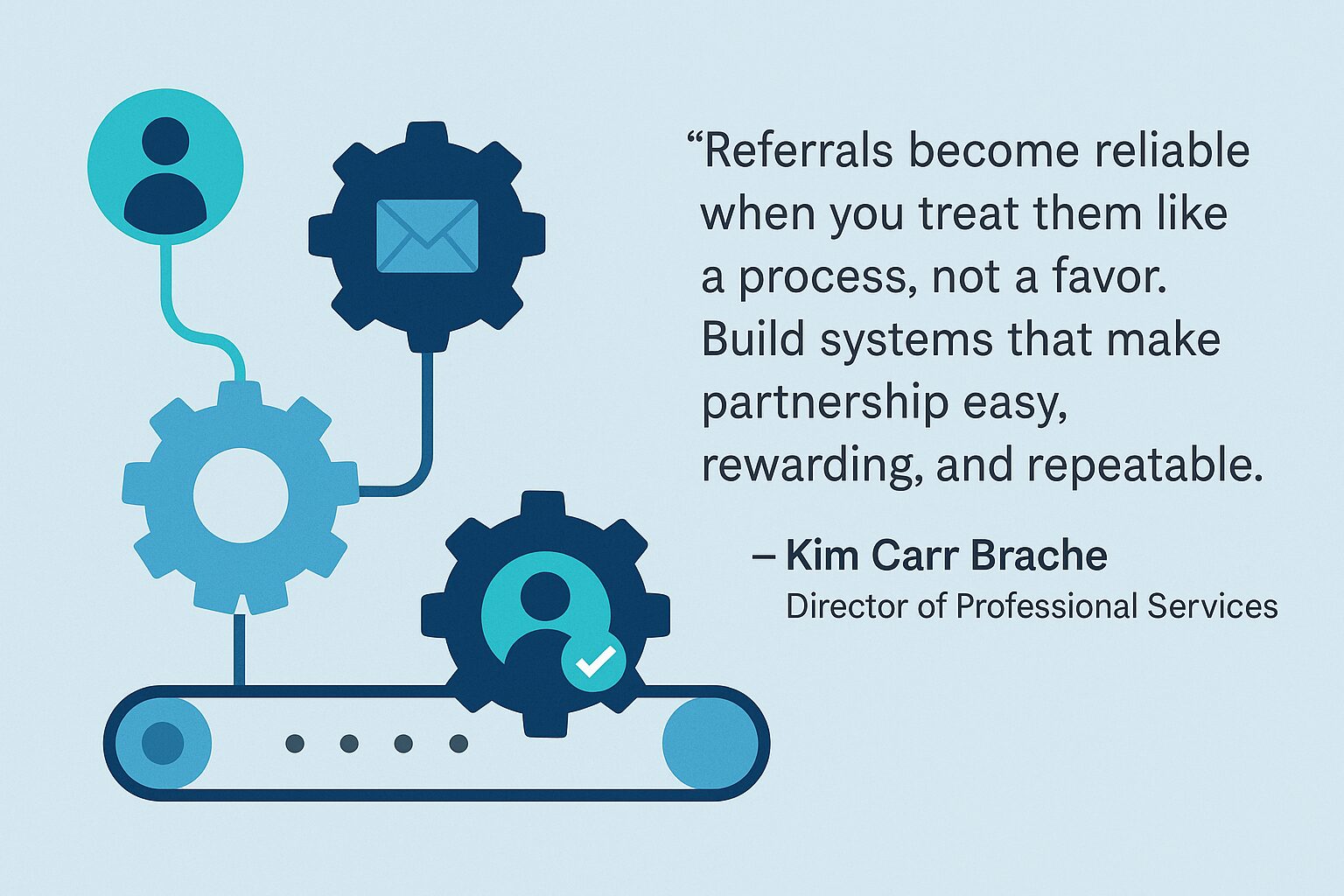
Step 2: Build structure, not just trust
Great relationships matter, but trust alone does not keep a referral system alive; structure does. A documented process tells every partner exactly how a referral moves from introduction to outcome, which removes the friction that quietly kills momentum.
Define your process for four things:
- How referrals are submitted and tracked.
- How and when referrers are compensated or acknowledged.
- Who follows up, and how referral status is communicated back.
- What happens after the client signs.
Then create partnership tiers so each partner knows how they fit and what they earn:
- Referral Partners: introduce new leads and receive a referral fee.
- Strategic Partners: co-market, co-sell, or collaborate on shared clients.
- White-Label Partners: hire you directly to deliver services for their clients.
The more predictable and transparent your process, the more partners engage with it repeatedly. If you want a ready-made structure to plug into, our agency partnership program gives partners defined tiers, transparent rewards, and a single point of contact for shared client work.
Casual referrals vs. a referral engine
The difference between referrals that trickle in and referrals you can forecast comes down to a handful of operational habits. A casual approach depends on memory and goodwill; an engine depends on documented systems that run whether or not your calendar is full. Use the comparison below to see which side your current referral activity sits on.
| Dimension | Casual referrals | A referral engine |
|---|---|---|
| Trigger | Happens by chance when a partner remembers you. | Prompted by a defined process and regular cadence. |
| Ideal-client clarity | Partners guess who is a fit, so wrong-fit leads slip through. | A one-pager defines the perfect referral for every partner. |
| Incentives | Ad hoc thank-you, if anything at all. | Tiered, transparent rewards tied to outcomes. |
| Tracking | Lives in someone’s inbox or memory. | Logged in a CRM or shared system with status visible. |
| Measurement | Hard to prove value when budgets are reviewed. | Reported like a channel: volume, conversion, revenue. |
Most agencies are not missing referrals because partners dislike them; they are stuck in the left column and can move right with a little structure.
Referral engine vs. affiliate program: what is the difference?
A referral engine and an affiliate program both reward people for sending business your way, but they are not the same thing. A referral engine is relationship-driven: a known partner introduces a warm, pre-qualified client, and rewards are tied to closed, good-fit work. An affiliate program is volume-driven and often anonymous, paying a set commission on tracked clicks or sign-ups. For agencies selling complex, high-trust services, a referral engine almost always produces better-fit clients.
When should an agency formalize its referral program?
Formalize your referral program the moment introductions start arriving faster than you can track them by memory, or when a single missed follow-up would cost real revenue. In practice, that is usually once you have three to five active referral partners or referrals influence a meaningful share of new pipeline. Before that, a shared spreadsheet is fine; after it, undocumented goodwill quietly leaks deals.
Step 3: Use tech to power the engine
Automation does not make referrals impersonal; it makes them scalable. Tools like CRM automations or partner-management platforms track leads, communications, and payouts so relationships stay active even when your calendar is packed. Regular reporting then shows each partner how their introductions turned into revenue, creating a feedback loop that reinforces the next referral.
If this challenge sounds familiar, B2B Referral Revenue Playbook: Turning Partnerships Into Profit is worth a read.
Even a shared spreadsheet works if it is updated consistently and captures:
- Referral source.
- Date introduced.
- Stage in the pipeline.
- Deal value.
- Partner payout or recognition status.
The goal is visibility. When partners see real results from their effort, they stay motivated to keep referring. In our work with recruiting-software company JazzHR, we built a dedicated partner marketplace to give a 250-plus partner network a structured home instead of a single buried page; the marketplace generated 250-plus new partner requests and 30-plus qualified opportunities after launch. Structure, not goodwill alone, is what turned that partner ecosystem into pipeline. If you are weighing platforms and integrations, our strategic support team helps agencies connect the right tools without adding busywork.
Step 4: Stay top of mind with your partners
Most referral programs fade not because they fail, but because they go quiet. To keep referrals flowing, stay visible and useful in your partners’ world between handoffs, not just when you need a lead.
Keep the relationship warm with deliberate, low-lift touchpoints:
- Quarterly partner updates or mini-newsletters highlighting recent client success stories.
- New capabilities worth knowing about, such as advanced SEO or conversion rate optimization.
- Invitations to collaborate on thought leadership, webinars, or co-authored content.
- Public recognition of your top referrers.
When you treat partners like an extension of your team, they start to act like one.
Step 5: Turn wins into growth loops
A great referral engine feeds itself: every new partnership creates more visibility and credibility, which generates the next introduction. This is not wishful thinking. Harvard Business Review (2024) research on “referral contagion” found that referred customers go on to refer 30-57% more new customers than non-referred customers, and simply reminding people of their referral origin lifted successful referrals by 21%.
If this challenge sounds familiar, Partner Referral Growth: How to Turn One Referral Into Ten is worth a read.
To build that compounding loop into your engine:
- Collect stories and testimonials from successful partnerships.
- Share measurable results, such as the number of leads generated or revenue shared.
- Celebrate your partners’ success publicly and remind referred clients how they found you.
As your agency grows, so does the reach and quality of your referral network. Over time, you move from chasing introductions to managing an ongoing source of qualified opportunities. For the relationship discipline that keeps that engine running for years, see the long game of building referral relationships that last.
How do you measure the ROI of a referral engine?
You measure a referral engine the same way you measure any growth channel, because that is exactly what it is. Tracking performance proves the engine is a strategy rather than luck, and it keeps referrals defensible the moment a budget conversation starts. Without numbers, a referral channel is invisible to leadership.
Monitor a short, consistent set of metrics:
- Total referrals shared and received.
- Conversion rate and client retention on referred work.
- Revenue influenced by referrals.
- Partner engagement and satisfaction across referred projects.
Reporting these numbers on a regular cadence builds transparency with partners and gives you a clean story to bring to executives who want to know where growth comes from.
Frequently asked questions
What is a referral engine?
A referral engine is a documented, repeatable system for generating partner and client referrals on purpose rather than by chance. It combines clear ideal-client criteria, a defined submission and reward process, supporting technology, and regular communication so introductions arrive predictably. The result is a forecastable lead channel instead of occasional, unpredictable favors.
How do you start building a referral engine for an agency?
Start by defining what a great referral looks like in a simple one-page document covering your ideal clients, core services, differentiators, and what qualifies as a good fit. Then add a process for submitting, tracking, and rewarding referrals, and choose a CRM or shared system to log them. Clarity and structure come before scale.
How is a referral engine different from an affiliate program?
A referral engine is relationship-driven: known partners introduce warm, pre-qualified clients, and rewards are tied to closed, good-fit work. An affiliate program is volume-driven and often anonymous, paying a fixed commission on tracked clicks or sign-ups. For agencies selling complex, high-trust services, a referral engine typically delivers better-fit clients and higher retention than a pure affiliate model.
Are referred clients actually worth more?
Yes. According to Harvard Business Review (2011), referral programs were “strikingly profitable” across a three-year study of 10,000 accounts, and follow-up research from Harvard Business Review (2024) showed referred customers refer 30-57% more new customers than non-referred ones. Referrals also arrive with built-in trust, which shortens the sales cycle and improves retention.
How do you keep a referral program from going quiet?
Keep it active between handoffs instead of only reaching out when you need a lead. Send quarterly partner updates, share new capabilities and client wins, invite partners into joint thought leadership, and recognize top referrers publicly. Consistent, low-lift touchpoints keep your agency top of mind so referrals keep flowing.
How do you measure referral program ROI?
Track referrals like any growth channel: total referrals shared and received, conversion rate and retention on referred work, revenue influenced, and partner satisfaction. Reporting these metrics on a regular cadence proves the program’s value, reinforces the loop for partners, and keeps the channel defensible when leadership reviews the budget.
How 3 Media Web Can Help
3 Media Web partners with marketing and creative agencies to deliver reliable web design and development expertise that strengthens client results and, in turn, your referral ecosystem. Guided by our Human and AI approach, where judgment leads and automation supports, we act as a seamless extension of your team. For partners, that includes:
- Custom web design and development that aligns each client’s site with their business goals.
- Proactive website support that keeps shared client sites performing reliably between projects.
- Results-driven strategic support, from SEO to conversion work, that stays measurable and reportable.
- Transparent collaboration across the full digital experience, so every referred engagement exceeds expectations and earns the next introduction.
When every shared client experience builds mutual trust, referrals stop being occasional and start being an engine. Explore our agency partnership support or reach out to our team to talk through how a referral partnership built to scale should feel.
We collected everything we know about partnerships in one place: the Agency Partnership Playbook.