
TL;DR:
- Digital transformation in pharma requires strong leadership and clear communication from the CMO.
- Gaining buy-in starts with aligning digital goals to business and scientific priorities.
- Early wins—such as improved analytics, SEO visibility, or better engagement—help demonstrate ROI fast.
- Collaboration across regulatory, IT, and commercial teams builds long-term trust.
- The right digital partner can help CMOs execute change while managing internal resistance.
Pharma marketing leaders know that innovation is necessary—but not always easy to sell internally.
You may see the potential for a digital overhaul, new lead generation strategy, or a modernized website experience, but you’re also navigating a culture that values precision, compliance, and proven processes. Every move requires consensus, and every initiative carries risk.
The challenge isn’t about recognizing what needs to change—it’s about getting everyone else to see it too.
Step 1: Anchor Digital Strategy to Business Outcomes
Executives in pharma respond best when marketing initiatives connect clearly to measurable outcomes. Avoid leading with “we need a new website” or “we should invest in automation.” Instead, tie digital priorities to high-level business goals such as:
- Accelerating clinical awareness and education among healthcare professionals
- Supporting recruitment or retention for trials
- Enhancing corporate credibility for investors and partners
- Improving patient engagement or access to resources
By positioning digital investments as enablers of strategic business outcomes—not just marketing tools—you frame them as essential, not optional.
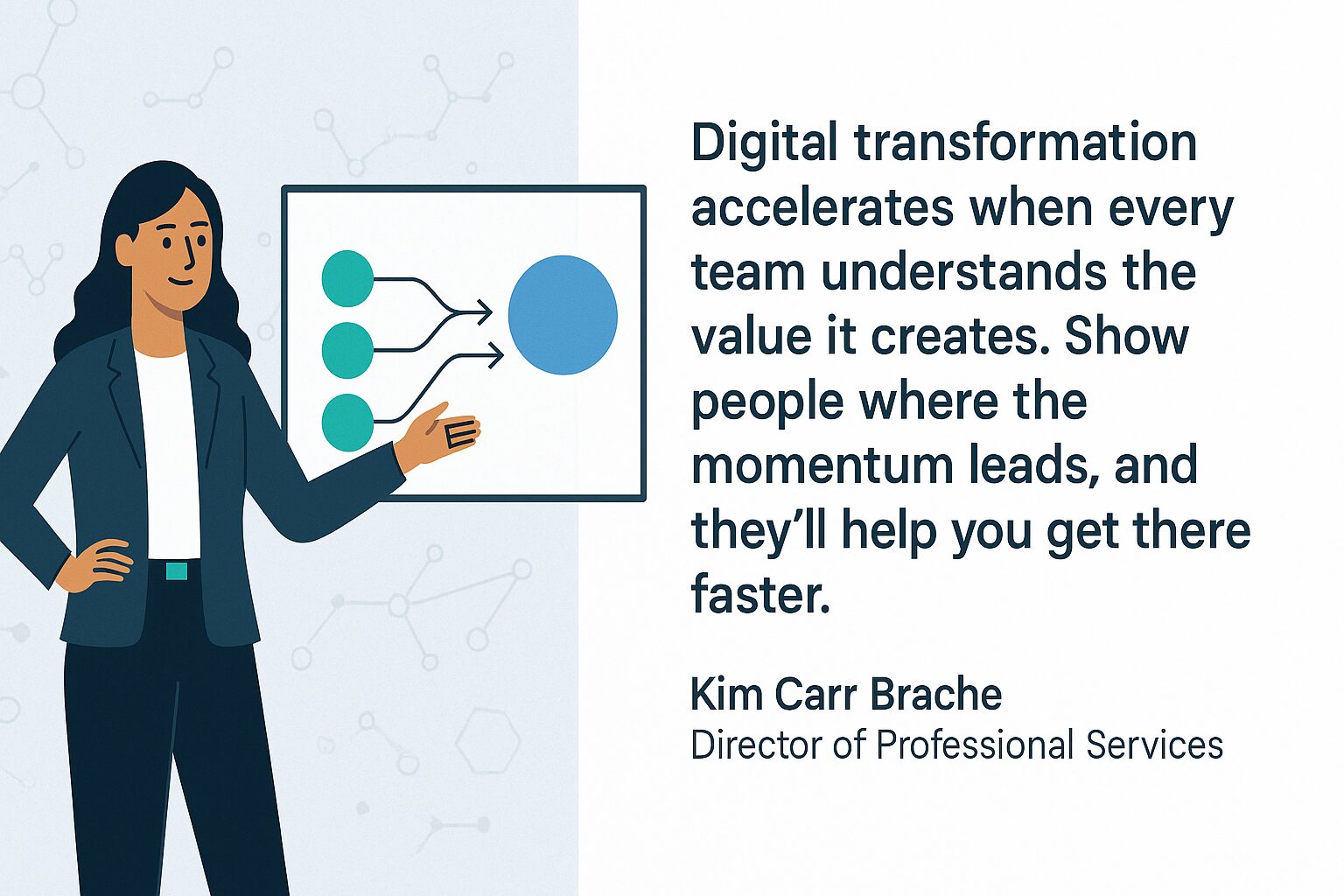
Step 2: Build the Case With Data and Momentum
Bold ideas need proof. Before presenting a major digital initiative, demonstrate momentum with smaller, measurable successes:
- Improve conversion rates through conversion rate optimization on existing pages.
- Launch a pilot digital campaign that generates qualified leads or improves brand visibility.
- Run a content refresh that boosts search rankings through targeted SEO.
These early results create credibility and help executives visualize the potential impact of a larger transformation.
Step 3: Translate Digital Goals Into Stakeholder Language
Different teams in pharma speak different languages—and CMOs need to speak them all. Regulatory wants compliance. IT wants integration. Sales wants leads. Leadership wants ROI.
Tailor your communication to each group:
- For Regulatory and Legal: Emphasize process controls, version management, and compliance monitoring.
- For IT: Show how your plan reduces friction and enhances data integration.
- For Commercial Leadership: Focus on conversion, engagement, and measurable pipeline impact.
- For Executives: Tie outcomes directly to market share, investor relations, or competitive advantage.
When stakeholders feel their priorities are built into your vision, they’re far more likely to support it.
Step 4: Address the Fear of Disruption
In pharma, hesitation often stems from risk aversion—not resistance to innovation. Leaders fear regulatory missteps, reputational risk, or internal overload.
Combat this by demonstrating how your digital initiatives protect, not endanger, the company:
- Highlight structured governance and approval workflows.
- Present clear success criteria with measurable KPIs.
- Share industry examples of successful digital modernization in comparable companies.
Pairing bold ideas with solid risk mitigation helps others feel confident about change.
Step 5: Champion Cross-Functional Collaboration
No digital transformation succeeds in a silo. In pharma, collaboration between marketing, regulatory, and R&D is essential. Build credibility by forming a steering group or digital task force that includes representatives from multiple departments.
This structure fosters transparency and encourages shared ownership of results—reducing resistance and ensuring that no one feels “out of the loop.”
Step 6: Create a Culture of Iteration
Digital transformation doesn’t need to happen all at once. In fact, small, iterative improvements often build more confidence than sweeping overhauls.
Examples of quick wins include:
- Enhancing patient or provider portals through improved web design and development
- Refreshing content layouts for better user engagement and accessibility
- Updating your analytics infrastructure to capture performance data
- Establishing monthly digital review sessions to track results
When teams see consistent progress, they’re more likely to stay engaged and supportive of larger digital goals.
How 3 Media Web Can Help
At 3 Media Web, we help pharma and biotech marketing leaders lead digital transformation with confidence. From strategic web design and development to ongoing website support, our approach aligns digital execution with organizational goals, compliance needs, and measurable performance.
We act as a trusted extension of your internal team—helping you communicate value, deliver results, and sustain digital momentum long after launch.