Last updated: August 2, 2026
TL;DR:
- No, SEO is not dead: Every major Google shake-up revives the “SEO is dead” headline, but organic search is still one of the most reliable ways to build a website that earns qualified traffic and makes sense to both people and search engines.
- The old tricks are dead: Keyword stuffing and quick hacks to game rankings no longer move the needle. What works is genuinely helpful, well-structured content tied to real user intent.
- AI changed the surface, not the fundamentals: Google AI Overviews now sit at the top of many results, so the bar for clear, authoritative, answer-first content is higher, not lower.
- Technical SEO still counts: Site speed, accessibility, mobile-friendliness, and clean crawlability remain the behind-the-scenes foundation rankings depend on.
- Strategy beats shortcuts: Durable results come from pairing SEO foundations with UX, CRO, content, and paid media, all aligned to business goals.
Is SEO dead, or is it just changing again?
SEO is not dead. The phrase resurfaces every time Google ships a big update, yet organic search remains one of the most dependable ways to build a website that earns qualified traffic and is easy for both people and search engines to understand. What dies, reliably, is the shortcut: the keyword-stuffing and ranking tricks that were always living on borrowed time. The fundamentals (helpful content, sound structure, technical health, and real authority) keep working.
We have practiced SEO for more than twenty years, through every “SEO is dead” cycle, and the through-line never changes: if your site does not make sense to robots, it will not make sense to your potential customers either. Get the foundations right and search becomes a steady, compounding source of visibility rather than a gamble on the latest hack.
Why does everyone keep saying SEO is dead?
Two things converged to fuel the latest round of obituaries, and neither one actually kills SEO.
First, AI answers moved to the top of the page. According to Google’s The Keyword blog (May 2024), AI Overviews would roll out to everyone in the U.S., placing an AI-generated summary above the traditional organic listings for many queries. If a search engine answers the question before the user scrolls, it is fair to ask how often they will click through to a website at all.
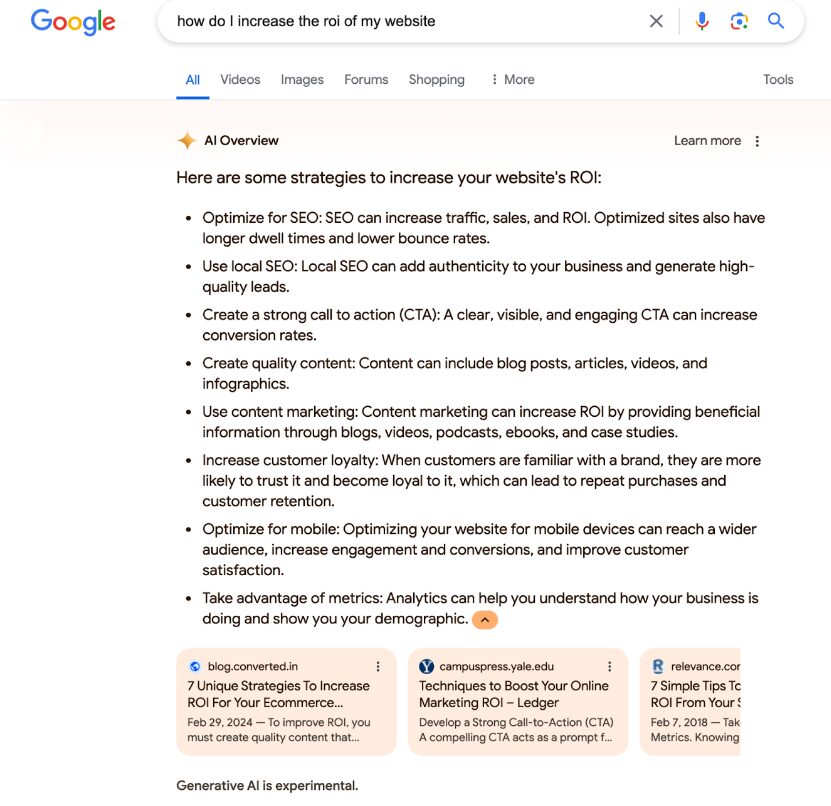
“I can understand why publishers are concerned about it,” said 3 Media Web Sr. Digital Strategist Kevin Caragher. “I don’t see people likely clicking into the small website links below the AI results, as they are so small and unnoticeable. If someone can get an answer to a question quickly in a short, specific response like the AI provides, they’re probably not going to read through long articles on the same topic.”
That concern is real, and it changes how you should write, but it does not erase the value of ranking. The content that earns those AI citations, and the clicks that still happen for deeper questions, is the same well-structured, genuinely useful content good SEO has always rewarded.
Second, Google’s own playbook leaked. According to SparkToro’s Rand Fishkin (May 2024), in the final week of that month an anonymous source shared thousands of internal Google Search API documents with the SEO community, offering a rare look at how Search is structured behind the scenes. After our team dug through the findings, we kept finding reassurance rather than reinvention. As one widely shared analysis of the documents put it: understand your audience, identify what they want, make the best thing possible that aligns with that, make it technically accessible, and promote it until it ranks. In other words, the leak mostly validated what seasoned SEOs have advocated for years.
What SEO fundamentals still matter in the age of AI search?
You cannot forget about SEO. You still need to follow the foundations that have outlasted every algorithm update. If you are auditing your own site, these are the non-negotiables worth getting right first:
- A well-organized site structure and clear page structure.
- Intuitive main navigation that gets people where they want to go.
- Page titles and H1 headings that match the page’s actual topic.
- Content that is relevant, valuable, and detailed enough to answer real questions.
- Clear calls to action that help people move through your site and take the next step.
- Fast-loading speeds on a safe, secure, fully functioning website.
- Smart tracking so you can capture and understand what is happening on your site.
These same fundamentals are what make a page eligible to be summarized or cited by AI in the first place. We go deeper on the on-page side in our quick guide to on-page SEO that works, and on the technical pitfalls that quietly erase rankings in our breakdown of the website redesign mistakes destroying SEO.
Black-hat tactics and keyword trickery are not worth the effort
“I think the fundamentals are always good to make sure you do with SEO, but some of the strategic ‘trickery’ executed has a shorter lifespan than it did years ago,” said Tom Broadwater, a Sr. Digital Strategist at 3 Media Web.
“SEO in the way of simply adding keywords (i.e., keyword stuffing) to things won’t drive meaningful ROI in itself,” added Adrian Aguirre, another Sr. Digital Strategist at 3 Media Web. “SEO has long grown to be a blanket term that encompasses things like CRO, UX, content strategy, and more.”
The point is not to ignore keywords, but to use them honestly. “The use of those words on the website should be to convey the message that ‘hey, if this is what you need, you can find it right here,’ as opposed to thinking we need to add this or that keyword just to get Google’s attention,” Broadwater said. “It’s definitely nuanced. You should know what keywords people use to search for whatever product or service you sell, but have a multi-pronged strategy where you write a blog article targeting specific keywords, share it on social media, link to related landing pages within the content, and so on.”
Any tactic built to juice results artificially is temporary at best. “Keywords are dead, any sneaky strategy is dead, trying to game your way to rank and increase organic traffic is basically dead,” said 3 Media Web CEO Marc Avila. “What does work is building a high-performing, engaging, and accessible website that resonates with your target audience, and driving traffic to it with a proven digital marketing strategy backed by data.”
What is Generative Engine Optimization (GEO)?
Generative Engine Optimization (GEO) is the practice of structuring content so AI answer engines, such as Google AI Overviews, ChatGPT, and Perplexity, can understand, quote, and cite it. It does not replace SEO; it extends it. The same signals that help a page rank (clear structure, direct answers, topical authority, and technical accessibility) are what make that page easy for an AI model to extract and attribute. If you already do SEO well, you are most of the way to being GEO-ready.
How should you pair SEO with a holistic website strategy?
SEO alone is no longer enough to drive quality traffic. Businesses trying to reach an audience online should tie strong foundational SEO together with tactics that have a lasting impact on traffic, leads, and revenue. The goal is a single, coordinated SEO strategy that feeds the rest of your marketing rather than competing with it.
In our work with EZTube, a manufacturer that already ranked for a large number of keywords but converted poorly, we saw this play out directly. Rather than chase new tricks, our team (led by Sr. Digital Strategist Tom Broadwater) optimized what already existed: rewriting headings and metadata around high-intent keywords, simplifying content blocks, and adding clearer calls to action. On an ultra-tight budget, that fundamentals-first approach drove a 95% year-over-year increase in ecommerce purchases, an 11% lift in key conversion events, and a 17% jump in total users. No hacks required, just the foundations applied well.
The clients who weathered AI Overviews and the other recent shifts best were already set up for this. We pair our SEO expertise with focus areas that compound over time:
- UX and design that make the site easy to use and trust.
- Conversion rate optimization (CRO) to turn more visitors into leads.
- Paid search campaigns for immediate, controllable visibility.
- Landing page design built to convert specific audiences.
- Demand generation strategies that create and capture intent.
“CRO and Paid Search are sustainable things,” Broadwater noted. “Paid Search is the one with the most staying power, because the search engines make money directly from it. They’re highly likely to find ways for it to continue to exist and evolve.” Pairing those paid strategies with a CRO program increases your odds of generating quality leads and customers from every other channel in your strategic support mix.
If your industry has its own search nuances, the same principles still apply. Our walkthrough of biotech SEO (what to do and what to avoid) shows how these fundamentals translate to a technical, high-stakes niche.
Old-school SEO vs. what actually works now
Most “SEO is dead” panic comes from confusing outdated tactics with the discipline itself. Use this side-by-side as a quick gut check. If you recognize a habit in the left column, treat it as a warning sign worth fixing before it costs you.
| Outdated tactic (on its way out) | What actually works now |
|---|---|
| Stuffing pages with repeated keywords to get Google’s attention. | Using the words your audience actually searches to signal “you can find what you need right here.” |
| Chasing quick ranking hacks and sneaky shortcuts. | Building genuinely helpful, well-structured content tied to real user intent. |
| Treating SEO as an isolated checklist. | Pairing SEO with UX, CRO, content strategy, and paid media as one system. |
| Writing long pages that bury the answer. | Leading with a clear, answer-first response so people (and AI Overviews) get value fast. |
| Ignoring technical health and accessibility. | Keeping the site fast, secure, mobile-friendly, and easy to crawl. |
| Setting it and forgetting it. | Tracking performance and adjusting based on data, not assumptions. |
Frequently asked questions
Is SEO dead in 2026?
No. SEO is not dead; the shortcuts are. Keyword stuffing and ranking tricks have lost their power, but the fundamentals (helpful content, clear site structure, technical health, and genuine authority) still drive qualified organic traffic. Those same fundamentals are now what make a page eligible to be cited by AI search features.
How do Google AI Overviews change SEO?
AI Overviews place an AI-generated summary above many organic results, which means some quick-answer queries get resolved without a click. The response is not to abandon SEO but to raise the quality bar: lead with clear, answer-first content, structure it well, and build the topical authority that earns AI citations and the deeper clicks that still happen.
When should you invest in SEO versus paid search?
Use both, but time them differently. Paid search buys immediate, controllable visibility, which is ideal for launches, promotions, or testing demand fast. SEO is the compounding, lower-cost-per-click channel that pays off over months and keeps working after you stop spending. The strongest programs run paid search for speed while SEO and CRO build durable, lower-cost traffic underneath it.
How long does SEO take to show results?
Most sites see meaningful movement in three to six months, though competitive terms and new domains can take longer. Timing depends on your starting authority, technical health, and content quality. Optimizing pages that already rank (as opposed to building new authority from scratch) tends to produce faster wins, which is why an audit-first approach often shows results soonest.
Did the 2024 Google documentation leak change SEO best practices?
Not fundamentally. The leaked Google Search API documents gave the SEO community a rare look behind the curtain, but the takeaway largely confirmed long-standing best practices: understand your audience, build the best possible content for them, make it technically accessible, and promote it until it ranks.
Does keyword stuffing still work?
No. Adding keywords just to get a search engine’s attention does not drive meaningful ROI and can hurt the user experience. Use the terms your audience genuinely searches to make it clear your page answers their need, then support that page with internal links, technical health, and promotion.
How 3 Media Web can help
SEO still works, but doing it well, especially now that AI sits at the top of the results page, takes strategy, technical depth, and consistency. At 3 Media Web, we help B2B marketing teams turn their websites into revenue-driving assets by pairing SEO with UX, CRO, content, and paid media, guided by our Human and AI approach so judgment leads and automation supports. Our strategic support services adapt as the search landscape (and your business) changes.
Ready to stop chasing hacks and build something durable? Contact 3 Media Web to align your SEO with a strategy that actually drives growth.