Last updated: July 27, 2026
- Edgy website design means bold, distinctive visuals that make your brand stand out and keep visitors engaged.
- It works for five reasons: it boosts visibility, keeps you current, suits a mobile-first audience, supports accessibility, and feeds digital experience optimization.
- Edgy is a spectrum, from cool minimalism to urban grit, so the goal is a look that fits your brand, not shock for its own sake.
- First impressions form in about 50 milliseconds, so a distinctive design earns attention fast.
- Balance personality with usability, performance, and accessibility to turn attention into conversions.
What is edgy website design?
Edgy website design is a bold, distinctive visual approach that helps a brand stand out and hold attention. In UX design, edgy can mean innovative, cutting-edge, or avant-garde, sitting just outside the mainstream with a touch of daring. It is expressed through fonts, colors, imagery, and motion, and it ranges from cool minimalism to the rough texture of urban grit.
Choosing a website design is hard. Do you want it flashy or subtle, buttoned-down or artsy, classic or avant-garde? We vote for edgy, because a design that stands out from the crowd is a key part of building a brand. Giving your site a makeover with today’s edgy design trends can earn new visibility and a fresh attitude. The combinations are nearly endless, which is good news: you and ten peers can all have edgy sites that look completely different. Whatever form you choose, here are five reasons to make your website design edgier.
Looking to build an edgy website for your own business? We are here to help. Reach out to get started.
1. Edgy design boosts your site’s visibility
Edgy design boosts visibility because we are drawn to the thing that looks different from everything around it. When the competition all looks the same, a distinctive design is what gets noticed and remembered. The trick is to put your own spin on it rather than copy a trend.

Edgy site design changes often pair strong, textured backgrounds with minimal fonts, or place ornate fonts on simple backgrounds. Colors can range from dramatic black and white to high-contrast, pop-art palettes for a memorable look that separates you from more traditional sites. Most importantly, the style has to suit you. The same edgy principle looks completely different depending on who you serve, so the right move is to match the style to your brand and audience rather than chase a trend.
Here is how an edgy direction shifts by business type:
| Business type | Edgy style that fits | Why it works |
|---|---|---|
| Tattoo studio | Black-and-white, all-caps type with diagonal lines and hand-drawn accents | Reads as professional while signaling the artistry clients expect |
| Wedding-cake bakery | Graceful looping script on a soft, high-contrast palette | Feels elegant and personal, where graffiti grit would feel off-brand |
| Vintage record store | All-caps retro type in a red-and-black scheme | Evokes the era and stays legible, unlike a cluttered novelty font |
| B2B tech or SaaS company | Cool minimalism with bold accent color and generous whitespace | Looks current and trustworthy without reading as a boring template |
A graffiti-inspired homepage might be wrong for a wedding-cake bakery but perfect for a tattoo studio, so the goal is a distinctive look that still matches your brand and audience. For more on how a focused redesign holds attention, see our guide to the visual elements your website UX needs to get right.
2. Edgy design keeps you current with web design trends
Edgy design keeps your site current because web design trends evolve as quickly as clothing trends. Styles that were cutting-edge a few years ago can look stagnant next to newer, more dynamic designs, and a dated look gives visitors a reason to leave.
For a closer look at how this plays out, see 7 Tired Web Design Trends That Make Your Site Look Dated.
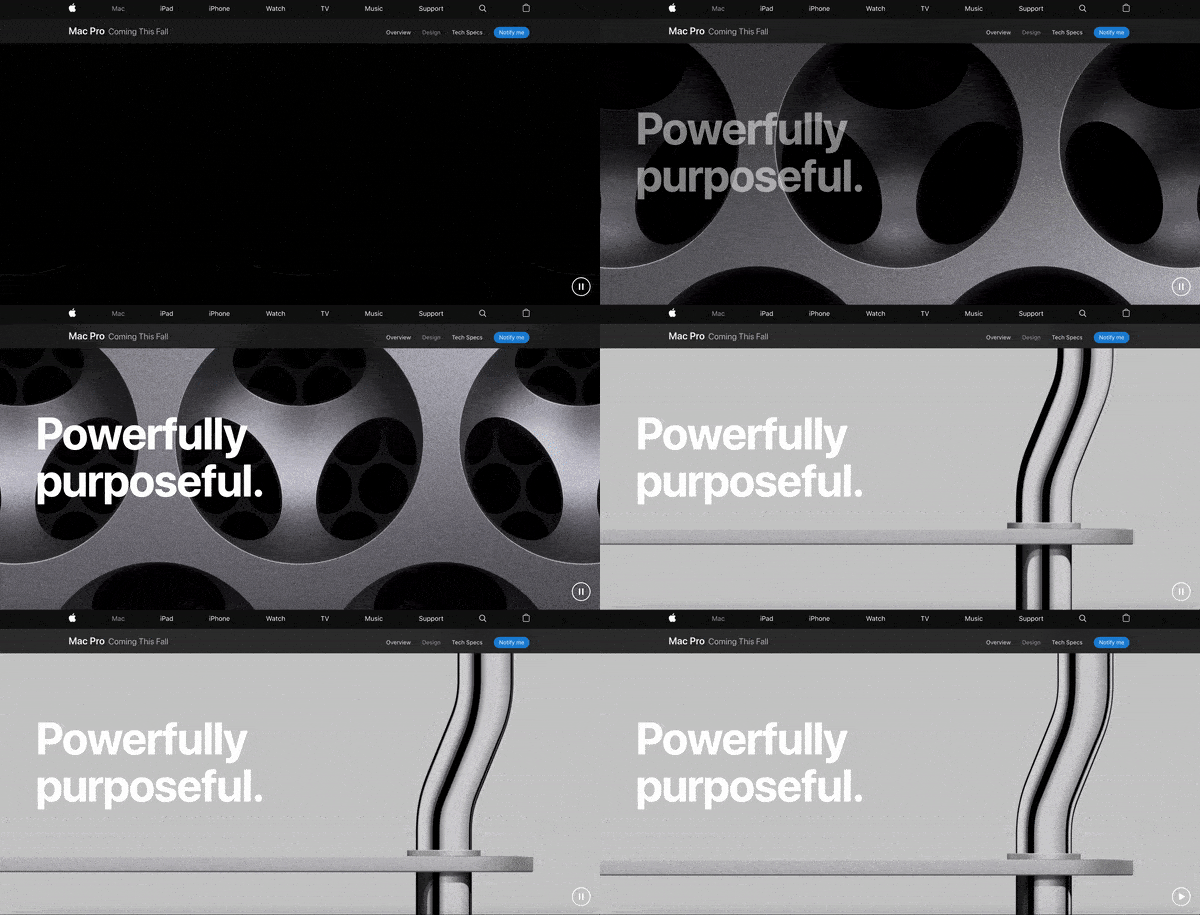
First impressions matter more than most teams realize. According to Lindgaard et al. (2006), in a study published in the journal Behaviour & Information Technology, it takes roughly 50 milliseconds for a visitor to form an opinion about your site’s visual appeal, and that snap judgment shapes whether they stay. An outdated style can be the only excuse a visitor needs to look elsewhere. Edgy design trends give a site a polished, sophisticated look that works for a cupcake company or a skateboard manufacturer, and that sense of newness is often enough to keep visitors around.
3. Edgy design suits a mobile-first audience
Edgy design suits today’s mobile-first audience because modern, vibrant layouts are built with phones in mind. Mobile traffic now accounts for a large share of ecommerce, and most adults expect a website to look as good or better on a phone than on a desktop. A design that holds its format across devices captures attention and keeps it.
If this challenge sounds familiar, Website Design Elements: A Practical Breakdown for Marketers is worth a read.
Edgy styles appeal to digital natives, the users who grew up online where countless new things compete for relevance every day. Because today’s edgy designs maintain a consistent experience from desktop to mobile, they keep visitors engaged in ways that older, more static layouts cannot. In a world where tastes shift constantly, an edgy, responsive design can be exactly what refreshes your brand and brings in business.
4. Edgy design can support accessibility
Edgy design and accessibility work together when bold visuals are built on inclusive foundations. A more equitable web is better for everyone, and an eye-catching design loses its value if part of your audience cannot use it. The goal is personality with usability, not one at the expense of the other.
Follow recognized web design standards from trusted organizations such as the World Wide Web Consortium (W3C) and the International Organization for Standardization (ISO), which promote the guidelines that make the web better for all users. Beyond doing the right thing, following accessibility guidelines helps protect your business from liability, since lawsuits over inaccessible websites are increasingly common. Reaching more people also expands your audience, and more people consuming your content means more chances to convert visitors into leads.
5. Edgy design feeds digital experience optimization
Edgy design feeds digital experience optimization by tying a distinctive look to measurable business outcomes. As search engines raise the importance of user experience, design and marketing have to work together more closely than ever. A bold design is most valuable when it is pointed at conversions, not just aesthetics.
In our work with fintech company Hum Capital, an incongruent design was actively holding back engagement and conversions. We replaced it with a clean, on-brand look built around a new color palette, purposeful motion, and a mobile-optimized experience with streamlined calls to action. The redesign lifted website traffic by 39% and conversion rate by 7% immediately after launch, a clear example of a distinctive design pointed at results rather than style for its own sake.
We unpack this further in How to Design a Successful Education Website.
Combining web design and marketing into one strategy, digital experience optimization gives a business a better chance at improving its bottom line. Teams can optimize a site for conversions, for example by shifting the design to drive traffic toward high-converting content or other valuable paths. That is where edgy visuals and conversion rate optimization reinforce each other: attention gets the visitor in the door, and a well-structured experience turns that attention into action.
When should you choose an edgy design over a safe one?
Choose an edgy design when standing out matters more than blending in, when your audience expects creativity, or when a dated look is costing you attention. A safer, more conventional design is the better call when your buyers value predictability and trust signals above all, such as in finance, healthcare, or legal services. In those cases, aim for restrained distinctiveness: one bold element on an otherwise clean, familiar layout.
Frequently asked questions
What does edgy website design mean?
Edgy website design is a bold, distinctive visual style that helps a brand stand out and hold attention. It can mean innovative, cutting-edge, or avant-garde, and it is expressed through fonts, colors, imagery, and motion. Edgy spans a wide range, from cool minimalism to urban grit, so it adapts to almost any brand personality.
Is edgy design right for every business?
Edgy design can work for nearly any business, but the specific style has to fit the brand and audience. A graffiti-inspired look suits a tattoo studio more than a wedding-cake bakery, where a graceful script might be better. The principle stays the same: choose a distinctive design that still matches who you serve.
Why do first impressions matter so much in web design?
First impressions matter because visitors form an opinion of a website in roughly 50 milliseconds, and many will leave a page they find unattractive. That split-second judgment shapes whether someone stays or bounces, so a distinctive, current design earns the attention you need before a visitor ever reads your copy.
Does edgy design hurt accessibility?
Edgy design does not have to hurt accessibility when it is built on inclusive foundations. Bold visuals and accessible design coexist by following W3C and ISO standards for contrast, readability, and navigation. Done well, an edgy site reaches more people, reduces legal risk, and expands the audience you can convert into leads.
How is edgy design different from a trendy template?
Edgy design is built around your brand, while a trendy template applies the same look to everyone who buys it. A template can feel current for a season, but it rarely makes you memorable and often forces your content into someone else’s structure. Edgy, custom design starts from your audience and goals, so the look also supports usability and conversions.
How do you keep an edgy website fast?
Keep an edgy site fast by budgeting performance from the start: compress and lazy-load imagery, use modern formats like WebP, limit heavy animation to key moments, and load custom fonts efficiently. Bold visuals and speed are not in conflict when the build is disciplined. A distinctive design that loads slowly still loses visitors, so treat Core Web Vitals as a design constraint, not an afterthought.
How do you measure whether an edgy design is working?
Measure an edgy design against outcomes, not opinions. Track engagement signals such as bounce rate, time on page, and scroll depth, then tie the design to conversions with goal tracking and, where possible, A/B tests. Compare pre- and post-launch traffic and conversion rate the way we do in client work. If a distinctive look raises attention but not action, the experience around it still needs tuning.
Related reading
Want to go deeper on how 3 Media Web approaches design and ongoing care? These guides pair well with this one:
- Design Toolkit vs. Page Layouts: Why We Design the Way We Do
- What to Expect From a Website Support Partner
How 3 Media Web Can Help
At 3 Media Web, we design edgy, on-brand websites that balance personality with performance, accessibility, and conversion, guided by our Human and AI approach so strategy leads and automation supports. That includes custom web design that makes your brand stand out, broader web design and development that scales as you grow, proactive website support that keeps the experience fast and reliable, and accessibility best practices that widen your reach. We help teams turn a distinctive design into measurable results rather than style for its own sake.
Ready to build an edgy website that refreshes your brand and drives business? Reach out to our team to talk through your goals and build a site that evolves at the pace of your business.